





Xiaomi officially unveiled HyperOS 4 in China on August 13, 2026, and simultaneously launched the beta testing program for the new operating system. The company revealed the key improvements in performance, interface, memory management, and Super XiaoAI 2, while devices have already begun receiving access to HyperOS 4.
The stable version release date and global rollout schedule for Xiaomi, REDMI, and POCO smartphones and tablets depend on the region, device class (flagship or budget), and its position in the rollout queue.
HyperOS 4 Release Date
The official HyperOS 4 release date is August 13, 2026. Instead of holding a traditional launch event, Xiaomi immediately opened registration for the HyperOS 4 Beta program in China.
It is important to distinguish between the HyperOS 4 announcement date and the release date of stable firmware. The official announcement took place on August 13 and beta testing began, but Xiaomi has not yet revealed when the stable version will be released.
A distinction should be made between the HyperOS 4 announcement date and the release date of the stable firmware. The official announcement took place and beta testing began on August 13, but the release date of Xiaomi’s stable version was September 7, 2026. On that day, the first Chinese HyperOS 4-based builds were released for the Xiaomi 18 Fold and Xiaomi Pad 9 Pro Max.
On 17 September, the official Xiaomi community account published a rollout schedule for the Chinese version of HyperOS 4. The rollout of stable updates will begin on 15 October.
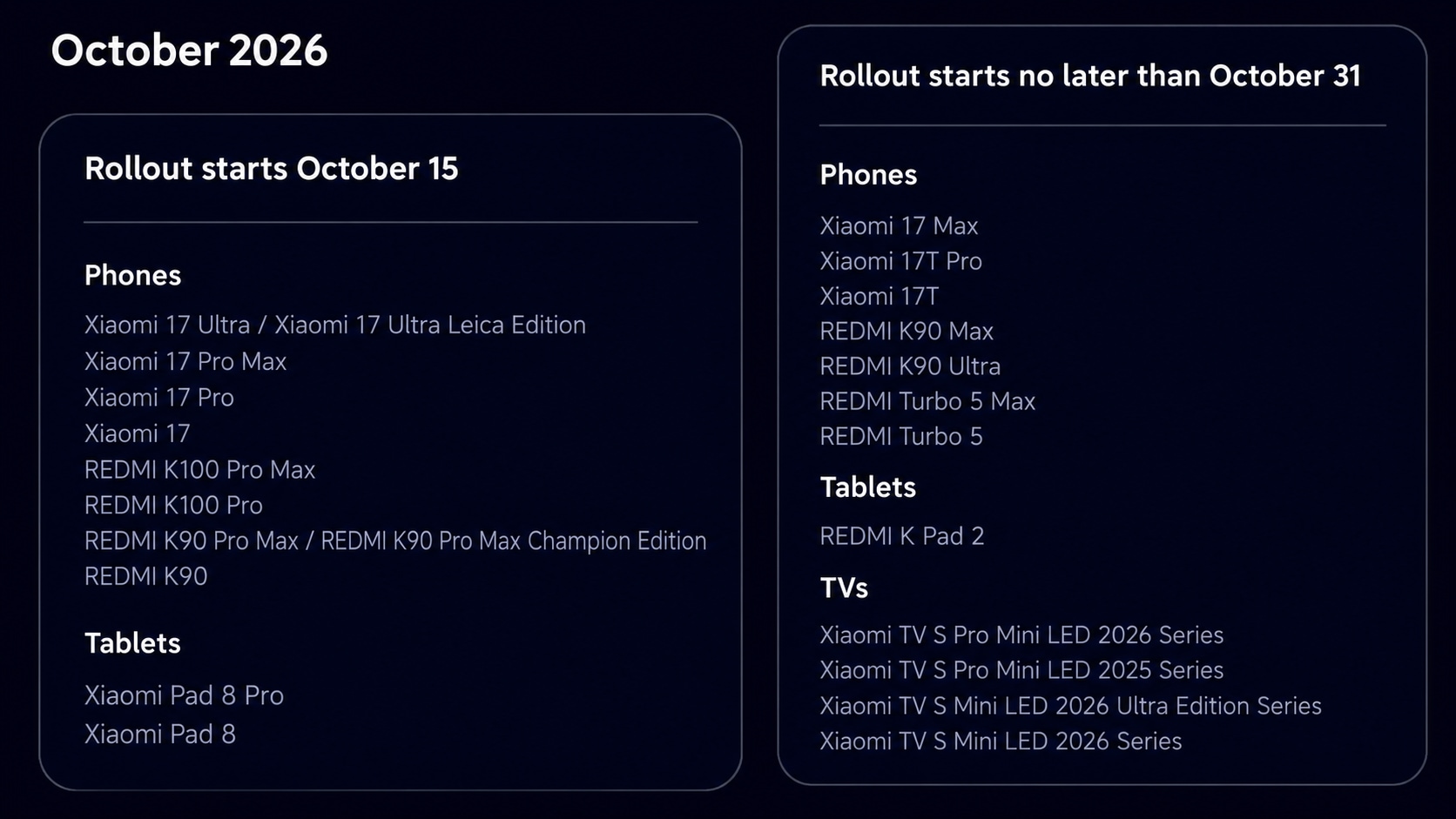
Starting October 15, 2026:
- Xiaomi 17, 17 Pro, 17 Pro Max, 17 Ultra, 17 Ultra Leica Edition
- REDMI K100 Pro, K100 Pro Max
- REDMI K90, K90 Pro Max, K90 Pro Max Champion Edition
- Xiaomi Pad 8, Pad 8 Pro
Starting no later than October 31, 2026:
- Xiaomi 17 Max, 17T, 17T Pro
- REDMI K90 Max, K90 Ultra
- REDMI Turbo 5, Turbo 5 Max
- REDMI K Pad 2
- Xiaomi TV S Pro Mini LED 2025 Series, TV S Pro Mini LED 2026 Series
- Xiaomi TV S Mini LED 2026 Series, TV S Mini LED 2026 Ultra Edition Series
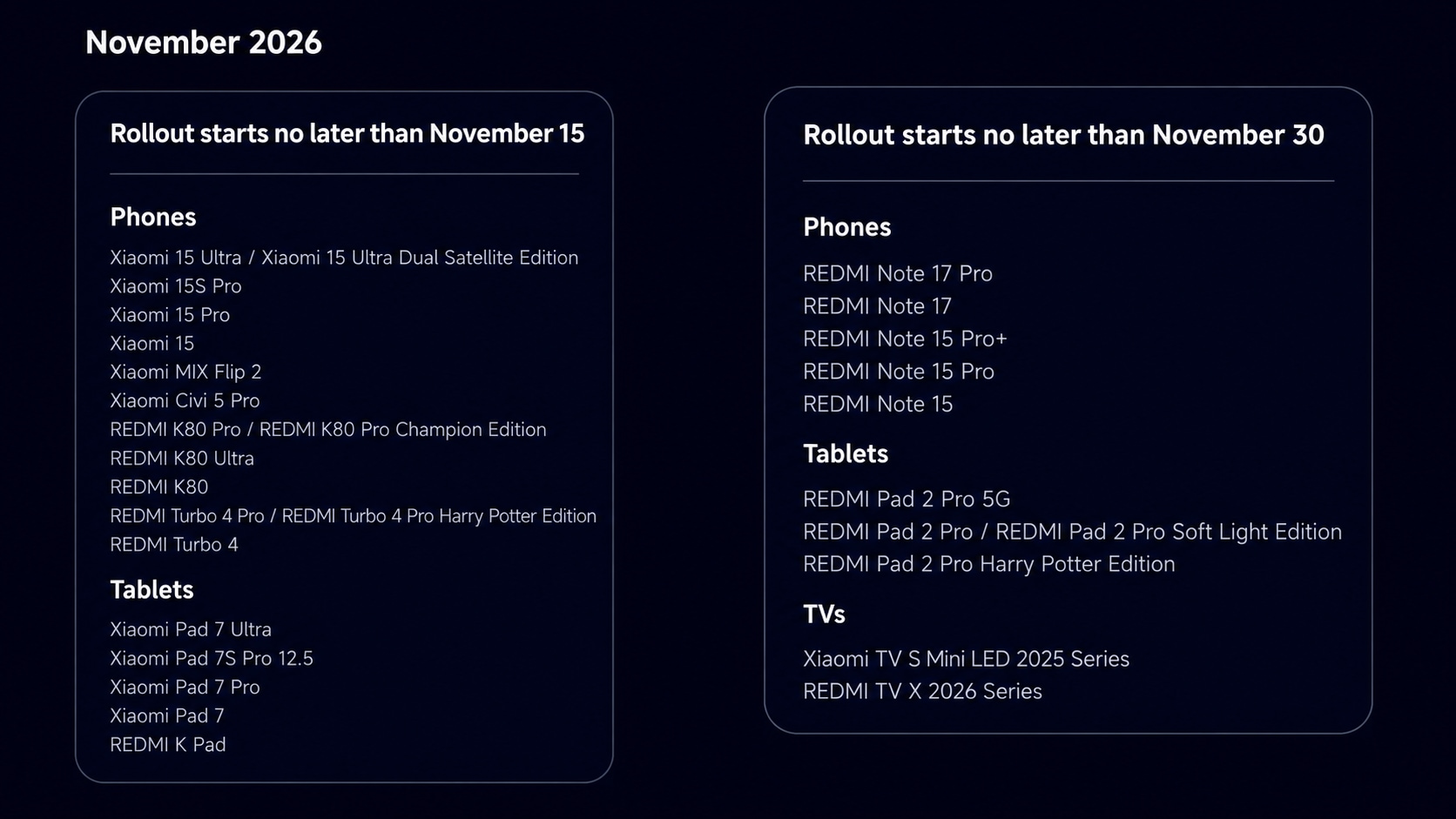
Starting no later than November 15, 2026:
- Xiaomi 15, 15 Pro, 15S Pro, 15 Ultra, 15 Ultra Dual Satellite Edition
- Xiaomi MIX Flip 2
- Xiaomi Civi 5 Pro
- REDMI K80, K80 Pro, K80 Pro Champion Edition, K80 Ultra
- REDMI Turbo 4, Turbo 4 Pro, Turbo 4 Pro Harry Potter Edition
- Xiaomi Pad 7, Pad 7 Pro, Pad 7S Pro 12.5, Pad 7 Ultra
- REDMI K Pad
Starting no later than November 30, 2026:
- REDMI Note 17, 17 Pro
- REDMI Note 15, 15 Pro, 15 Pro+
- REDMI Pad 2 Pro, Pad 2 Pro 5G, Pad 2 Pro Soft Light Edition, Pad 2 Pro Harry Potter Edition
- Xiaomi TV S Mini LED 2025 Series
- REDMI TV X 2026 Series
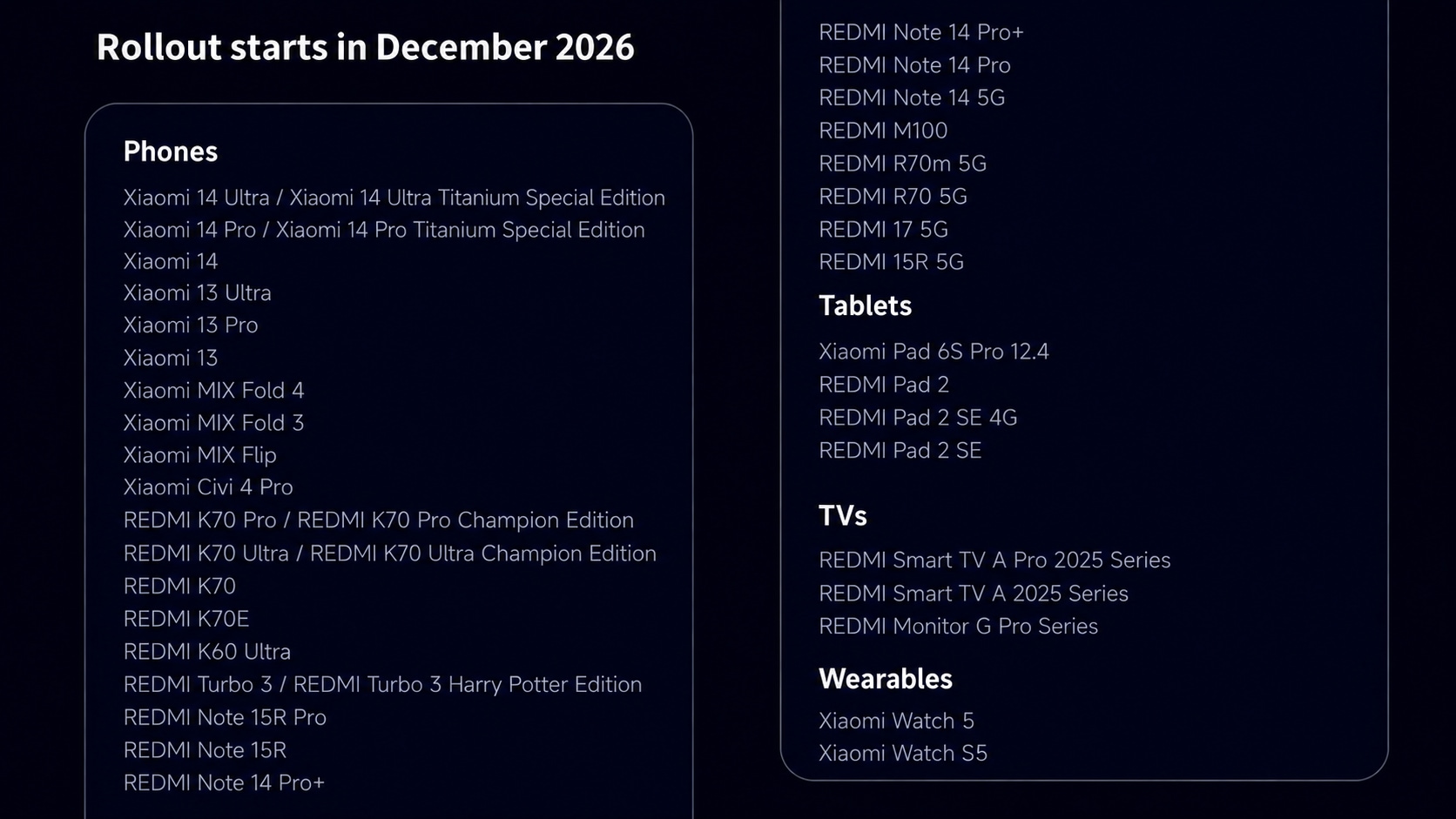
Starting in December 2026:
- Xiaomi 14, 14 Pro, 14 Pro Titanium Special Edition, 14 Ultra, 14 Ultra Titanium Special Edition
- Xiaomi 13, 13 Pro, 13 Ultra
- Xiaomi MIX Fold 3, MIX Fold 4
- Xiaomi MIX Flip
- Xiaomi Civi 4 Pro
- REDMI K70, K70E, K70 Pro, K70 Pro Champion Edition, K70 Ultra, K70 Ultra Champion Edition
- REDMI K60 Ultra
- REDMI Turbo 3, Turbo 3 Harry Potter Edition
- REDMI Note 15R, Note 15R Pro
- REDMI Note 14 5G, Note 14 Pro, REDMI Note 14 Pro+
- REDMI R70 5G, R70m 5G
- REDMI M100
- REDMI 17 5G
- REDMI 15R 5G
- Xiaomi Pad 6S Pro 12.4
- REDMI Pad 2, Pad 2 SE, Pad 2 SE 4G
- REDMI Smart TV A 2025 Series, Smart TV A Pro 2025 Series
- REDMI Monitor G Pro Series
- Xiaomi Watch 5, Xiaomi Watch S5
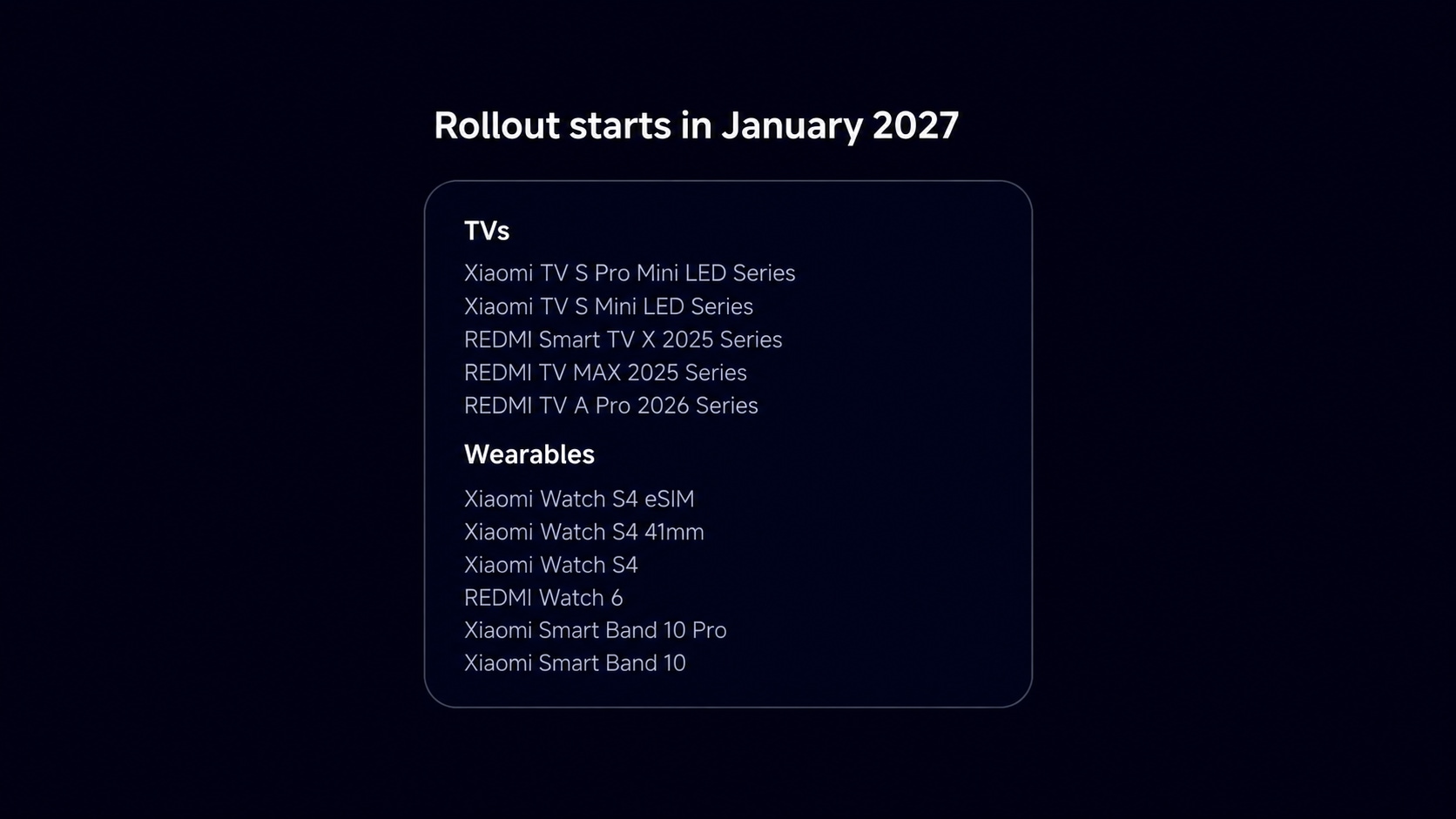
Starting in January 2027:
- Xiaomi TV S Pro Mini LED Series
- Xiaomi TV S Mini LED Series
- REDMI Smart TV X 2025 Series
- REDMI TV MAX 2025 Series
- REDMI TV A Pro 2026 Series
- Xiaomi Watch S4, S4 41mm, S4 eSIM
- REDMI Watch 6
- Xiaomi Smart Band 10, 10 Pro
Xiaomi has not yet announced a release date for Global HyperOS 4. However, recruitment for the global beta test began on 10 September. Based on previous update schedules, the first global firmware updates are expected in late September or early October 2026.
Test builds of HyperOS 4 for international markets have already been found on Xiaomi servers. Along with the main global firmware carrying the MIXM index, the company is testing versions for Europe, India, Taiwan and the other HyperOS 4 Global versions. Builds like these usually appear a few weeks ahead of the public rollout.
HyperOS 4 release date in India
These dates give an idea of the HyperOS 4 release date in India: October-November 2026. The Indian version is usually released slightly later than the global one.
In the previous cycle, the stable wave in India began roughly one to two months after the global announcement, with HyperOS 3 reaching Indian devices between late November and December 2025.
The rollout in India started with current flagships such as the Xiaomi 15 series, then quickly extended to popular models like the POCO M7 Pro 5G and REDMI Note 14 5G, while budget and older phones were updated last.
As for the Philippines, Sri Lanka, Pakistan, and Bangladesh, there is no separate regional firmware for these markets, so devices there run the Global ROM and receive HyperOS 4 on the global rollout schedule rather than on a country specific one. Their release date is therefore close to the global wave and does not depend on the region itself.
For India, when HyperOS 4 arrives depends on the specific model and its position in the rollout queue. You can check the India column in the Xiaomi, REDMI, and POCO update trackers to see the HyperOS 4 update status for your device.
The HyperOS 4 update rollout will first reach Xiaomi, REDMI, and POCO flagship devices, followed by mid-range phones and tablets.
Below is the HyperOS 4 eligible devices list, with compatible phones grouped by brand.
Which devices will receive HyperOS 4: update list
Xiaomi has officially confirmed the HyperOS 4 update for devices participating in the Chinese beta test:
The official list of global models was published on 10 September:
Xiaomi has not yet published a full list of devices that will receive the stable version of HyperOS 4. Only the models included in the beta program have been officially confirmed. The rest of the list below has been compiled based on the update policy, supported Android versions and data from AER.
The mi.com website has published a list of models that have received Google AER certification (awarded to smartphones that meet requirements for stability, security, and regular updates). The list specifies which Android versions each model is compatible with, effectively marking the supported devices.
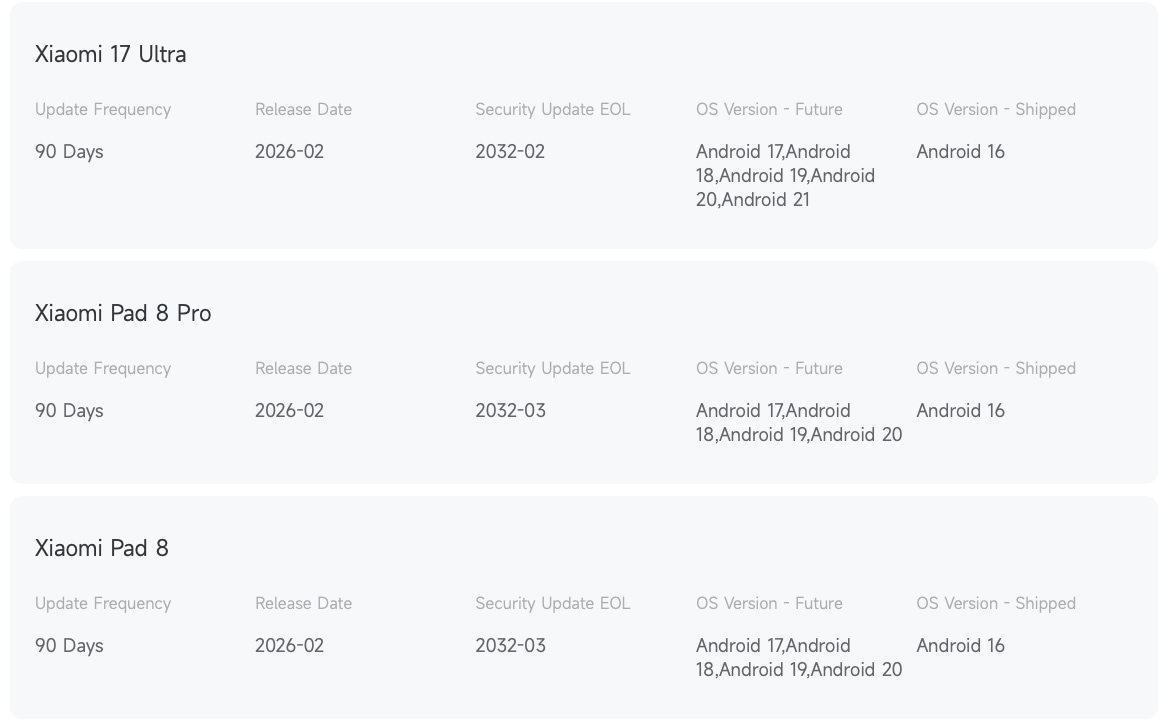
This is a handy guide and phone list for identifying compatible phones and tablets, since HyperOS 4 is based on Android 17. You can add recently released devices to the list of eligible devices, as they are sure to receive the upgrade. If you are wondering what devices will get HyperOS 4, this AER list is the best starting point to check compatibility.
HyperOS 4 eligible Xiaomi devices list
- Xiaomi 18 Fold, Xiaomi 18 Pro, Xiaomi 18 Pro Max
- Xiaomi 17, Xiaomi 17 Max, Xiaomi 17 Pro, Xiaomi 17 Pro Max, Xiaomi 17 Ultra, Xiaomi 17T, Xiaomi 17T Pro
- Xiaomi 15, Xiaomi 15 Pro, Xiaomi 15 Ultra, Xiaomi 15S Pro, Xiaomi 15T, Xiaomi 15T Pro
- Xiaomi 14, Xiaomi 14 Civi, Xiaomi 14 Pro, Xiaomi 14 Pro Ti Satellite, Xiaomi 14 Ultra, Xiaomi 14T, Xiaomi 14T Pro
- Xiaomi 13, Xiaomi 13 Pro, Xiaomi 13 Ultra, Xiaomi 13T, Xiaomi 13T Pro
- Xiaomi Civi 4 Pro, Xiaomi Civi 5 Pro
- Xiaomi MIX Flip, Xiaomi MIX Flip 2, Xiaomi MIX Fold 3, Xiaomi MIX Fold 4
- Xiaomi Pad 9, Xiaomi Pad 9 Pro, Xiaomi Pad 9 Pro Max
- Xiaomi Pad 8, Xiaomi Pad 8 Pro
- Xiaomi Pad 7, Xiaomi Pad 7 Pro, Xiaomi Pad 7 Ultra, Xiaomi Pad 7S Pro 12.5
- Xiaomi Pad 6S Pro 12.4
- Xiaomi Pad Mini
Rollout progress for each model is tracked in the Xiaomi HyperOS 4 update tracker.
Xiaomi HyperOS 4 exclusions include Xiaomi 13 Lite, Civi 3, the entire Xiaomi 12 series, and older models. The same goes for MIX 4, for which support has ended.
Xiaomi devices typically receive 3-4 major OS updates. MIX Fold 2 has already received four updates and is expected to remain on its current version.
Xiaomi tablets receive a maximum of three OS versions, which means that in the Pad 6 lineup, only Pad 6S Pro 12.4 may receive an update.
HyperOS 4 eligible REDMI devices list
- Redmi K100 Pro, Redmi K100 Pro Max
- REDMI M100
- REDMI K90, REDMI K90 Max, REDMI K90 Pro Max, Redmi K90 Ultra
- REDMI K80, REDMI K80 Pro, REDMI K80 Ultra
- REDMI K70, REDMI K70 Pro, REDMI K70 Ultra, REDMI K70E
- REDMI K60 Ultra
- REDMI 17, REDMI 17 5G, REDMI 17 5G China, REDMI 17C, REDMI 17C 5G
- REDMI Note 17 4G, REDMI Note 17 5G, REDMI Note 17 Pro 5G, REDMI Note 17 Pro Max 5G
- REDMI 15, REDMI 15 5G, REDMI 15A 5G, REDMI 15C, REDMI 15C 5G, REDMI 15R 5G
- REDMI Note 15 4G, REDMI Note 15 5G, REDMI Note 15 Pro 4G, REDMI Note 15 Pro 5G, REDMI Note 15 Pro Plus 5G, REDMI Note 15 SE 5G, REDMI Note 15R
- REDMI Note 14 4G, REDMI Note 14 5G, REDMI Note 14 Pro 4G, REDMI Note 14 Pro 5G, REDMI Note 14 Pro Plus 5G, REDMI Note 14S
- REDMI A7 Pro, REDMI A7 Pro 5G
- REDMI R70 5G, REDMI R70m
- REDMI K Pad, REDMI K Pad 2
- REDMI Turbo 3, REDMI Turbo 4, REDMI Turbo 4 Pro, REDMI Turbo 5, REDMI Turbo 5 Max
- REDMI Pad 2, REDMI Pad 2 4G, REDMI Pad 2 9.7, REDMI Pad 2 Pro, REDMI Pad 2 Pro 5G, REDMI Pad 2 SE, REDMI Pad 2 SE 4G
The current update status for each model is listed in the REDMI HyperOS 4 update tracker.
REDMI smartphones typically receive two or three major updates. Consequently, REDMI A3 Pro, REDMI A4 5G, REDMI Turbo 3, the entire REDMI 14 lineup, and older models are the remaining devices that stay on their current operating system version.
REDMI A3, A3x, A5 and A7 run on Android Go; there is no HyperOS version for these smartphones.
The K50 series has completed its cycle of major updates, and support for REDMI K60 and K60E has officially ended. Only REDMI K60 Ultra has a real chance, as K50 Ultra received one more update than the others.
For REDMI Note 13 4G and 5G smartphones, the maximum Android version is 15, which is not supported by HyperOS 4. REDMI Note 13 Pro 5G, 13 Pro 4G, and 13 Pro Plus will remain on the third version.
REDMI Note 14 5G will likely not receive HyperOS 4 (or will receive it based on Android 16), while other models in the Note 14 series should be updated (REDMI Note 14S is in question).
The latest version for REDMI Note 12 and older models will be HyperOS 3 on Android 16. The same applies to REDMI Pad Pro, Pad Pro 5G, Pad SE, and Pad SE 8.7 tablets, for which two system updates are planned.
HyperOS 4 eligible POCO devices list
- POCO C95 Pro
- POCO C85, POCO C85 5G, POCO C85x 5G
- POCO C81, POCO C81 Pro
- POCO F9 Pro, POCO F9 Ultra
- POCO F8 Pro, POCO F8 Ultra
- POCO X8, POCO X8 Power, POCO X8 Pro, POCO X8 Pro Max
- POCO M8 5G, POCO M8 Power 5G, POCO M8 Pro 5G, POCO M8s 5G, POCO M8x 5G
- POCO F7, POCO F7 Pro, POCO F7 Ultra
- POCO X7, POCO X7 Pro
- POCO M7, POCO M7 5G, POCO M7 Plus 5G, POCO M7 Pro 5G
- POCO X6 Pro 5G
- POCO Pad C1, POCO Pad M1, POCO Pad X1
You can follow the rollout for each device in the POCO HyperOS 4 update tracker.
The AER list on mi.com does not include all POCO phones: some older models are listed, but the latest ones are missing.
POCO smartphones typically receive two major updates, or occasionally three. Since there is no official list, users have to rely on the number of updates and check the update statistics for each series.
POCO M7 Pro 5G may not receive an update, as it was released on Android 14 with a promise of two major updates, which have already been delivered. However, POCO’s update statistics show that the brand sometimes releases a third update without changing the Android version. Therefore, there is a chance that HyperOS 4.0 based on Android 16 will be released for this model.
POCO C71 and C81x run on Android Go and is not eligible for an update.
HyperOS 4 excluded devices
Based on the update policies and supported Android versions, we can put together a single list of devices not receiving HyperOS 4 that will stay on their current firmware. These exceptions come down to each brand’s update policy, and the exclusion of a model is usually tied to its maximum supported Android version:
- Xiaomi 13 Lite, Xiaomi Civi 3, Xiaomi 12 series, Xiaomi MIX 4, Xiaomi MIX Fold 2
- REDMI A3 Pro, REDMI A4 5G, REDMI A3, A3x, A5, A7, REDMI Turbo 3, REDMI 14 lineup, REDMI K50 series, REDMI K60, K60E, REDMI Note 13 4G, 13 5G, REDMI Note 13 Pro 4G, 13 Pro 5G, 13 Pro Plus, REDMI Note 12 and older, REDMI Pad Pro, Pad Pro 5G, Pad SE, Pad SE 8.7
- POCO C71, POCO C81x
If a quick HyperOS 4 check does not turn up your phone on the Xiaomi HyperOS 4 update list, don’t be too disappointed just yet. Xiaomi has not yet published the full official lists for China and the global market, while the final list of Xiaomi, REDMI, and POCO devices getting HyperOS 4 will be confirmed in a future official announcement.
HyperOS 4 Beta and Mi Pilot Download
On August 13, 2026, Xiaomi officially launched the HyperOS 4 beta testing programme in China. Testers sign up through the Xiaomi Community app, and the update is rolling out to phones and tablets in waves.
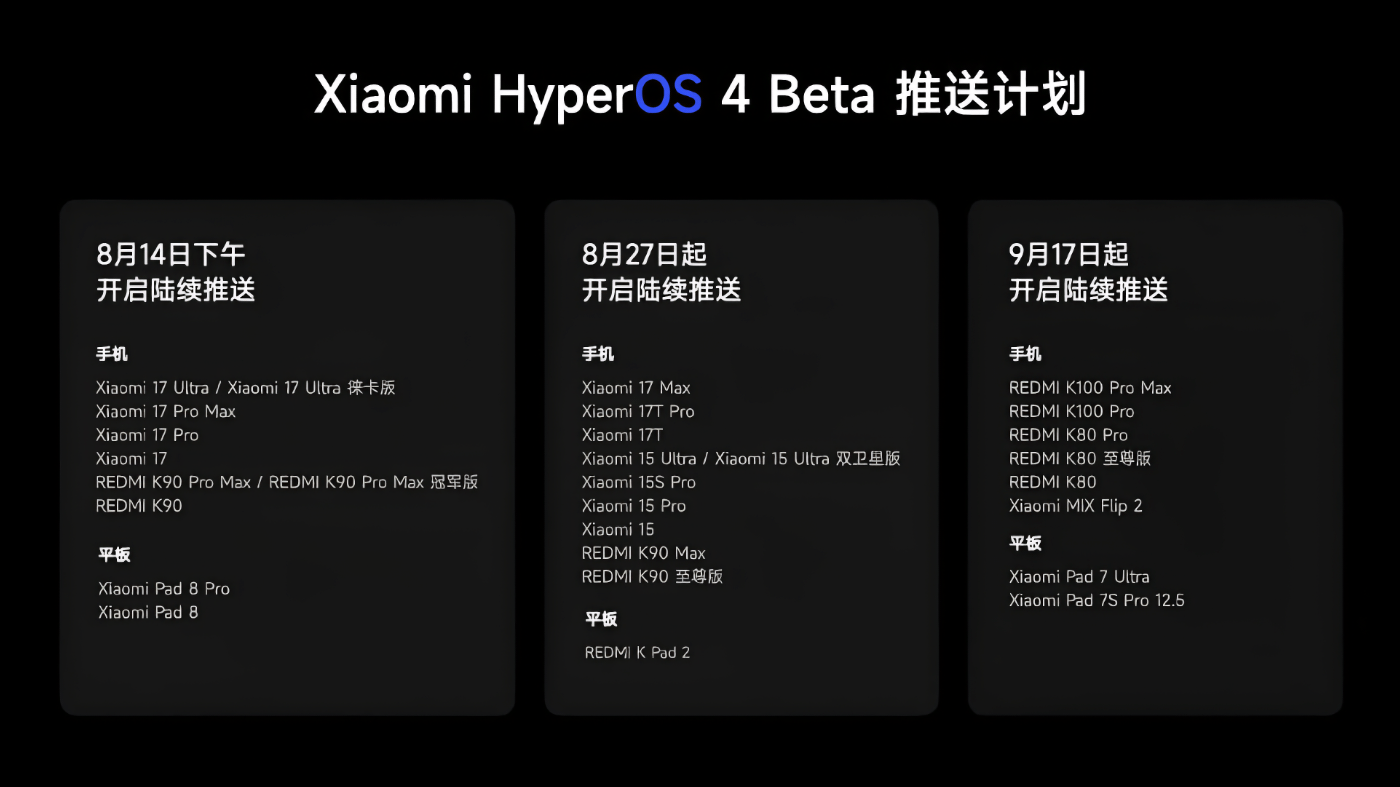
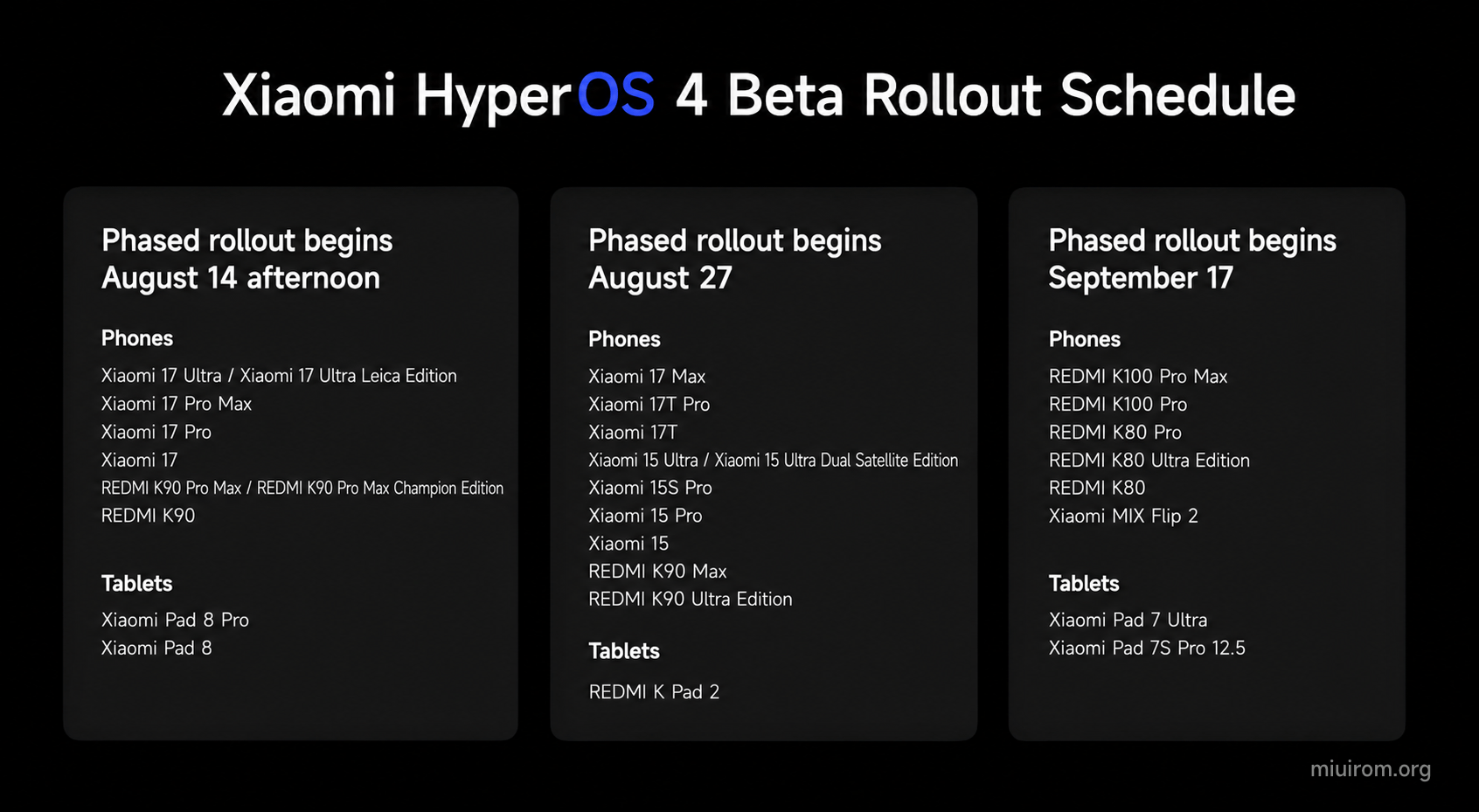
The image shows the staged rollout schedule of the Chinese beta version of Xiaomi HyperOS 4:
- First wave (from August 14): Xiaomi 17, 17 Pro, 17 Pro Max, 17 Ultra, 17 Ultra Leica Edition, REDMI K90, K90 Pro Max, K90 Pro Max Champion Edition, Xiaomi Pad 8 and Pad 8 Pro.
- Second wave (from August 27): Xiaomi 15, 15 Pro, 15S Pro, 15 Ultra, 15 Ultra Dual Satellite Edition, Xiaomi 17T, 17T Pro, 17 Max, REDMI K90 Max, K90 Ultra and REDMI K Pad 2.
- Third wave (from September 17): REDMI K80, K80 Pro, K80 Ultra, K100 Pro, K100 Pro Max, Xiaomi MIX Flip 2, Xiaomi Pad 7S Pro 12.5 and Pad 7 Ultra.
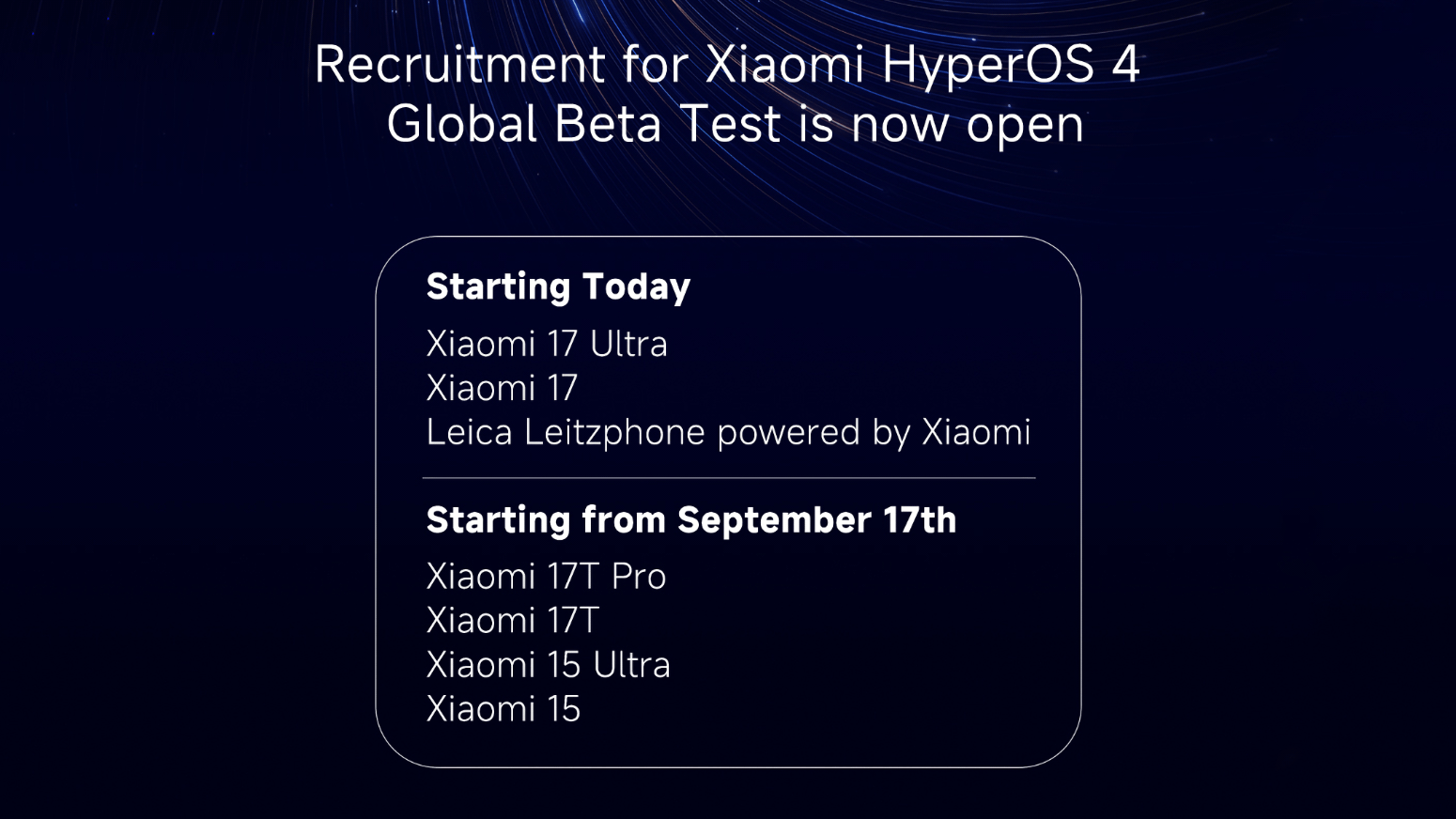
Recruitment for beta testing of the global (MI) and European (EU) versions of HyperOS 4 began on 10 September 2026:
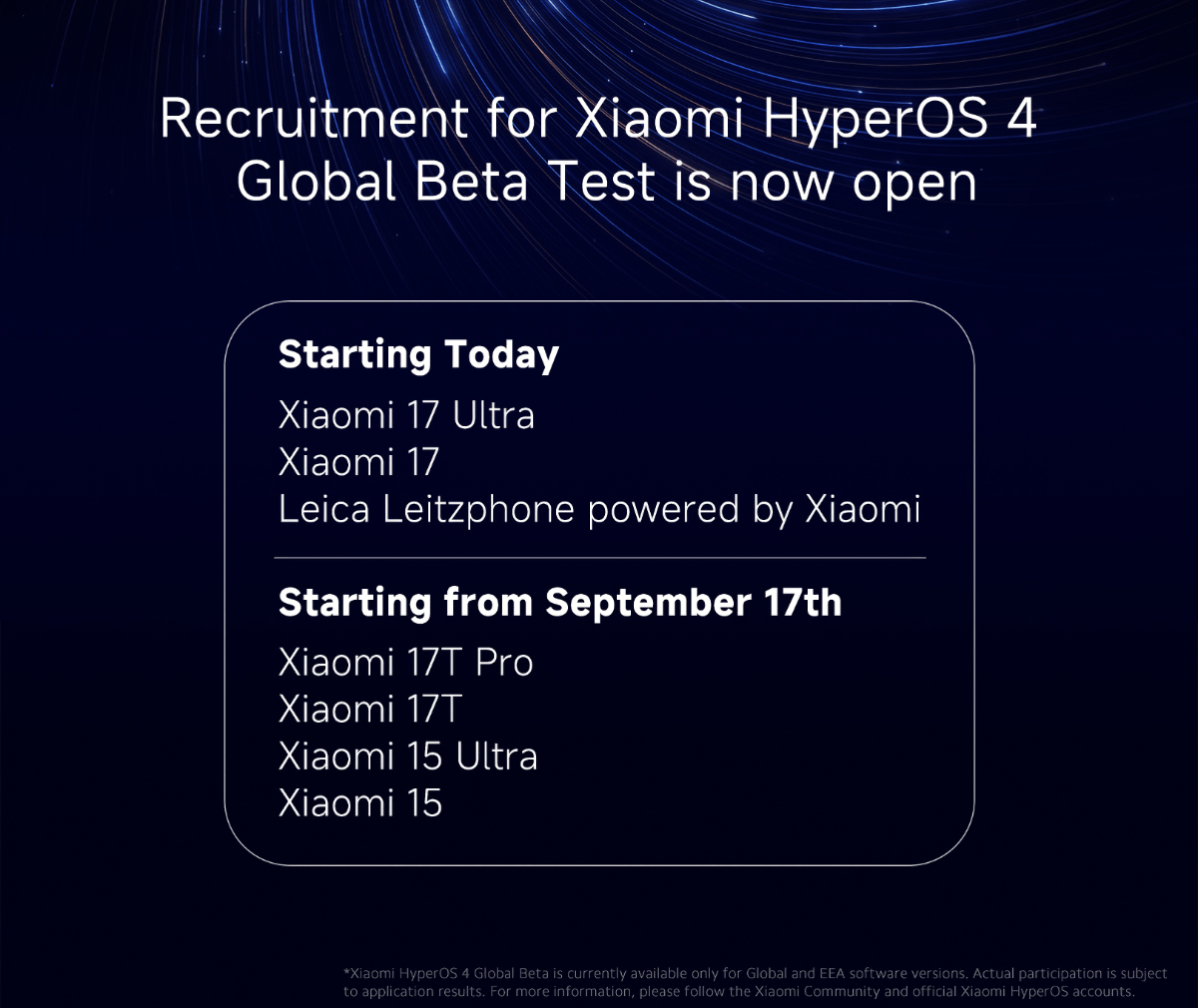
The rollout is taking place in two phases:
- First wave (starting 10 September): Xiaomi 17, Xiaomi 17 Ultra, Leica Leitzphone powered by Xiaomi.
- Second wave (starting 17 September): Xiaomi 17T and 17T Pro, Xiaomi 15 and 15 Ultra.
If your device model and region meet the requirements, you can sign up via Xiaomi Community → ME → Beta Testing → Tester Recruitment and fill out the application form.
Xiaomi is expanding the tester pool gradually, so the firmware may not arrive right after your application is approved. To install HyperOS 4 Beta, the device must be updated to the latest available version of HyperOS 3, and the Xiaomi Account on the device must match the account used to register for the programme.
Xiaomi warns that HyperOS 4 Beta is still under development, so some features may be unstable or missing for now. New capabilities will be added gradually in the upcoming test builds.
Backing up your data before installing the beta is recommended. Testers can report the bugs they find to Xiaomi through the Services & Feedback app or the Beta Community, attaching system logs, screenshots and videos that demonstrate the problem.
If you want to download the preview version of HyperOS 4 Pilot, the available Chinese Recovery ROM builds are listed below:
| Model | HyperOS 4 | Android | Release date | File size | Download link |
|---|---|---|---|---|---|
| Xiaomi 15 | 4.0.0.19.XOCCNXM | 17 | 23.09.2026 | 8.7 GB | Download (Mirror) |
| Xiaomi 15 Pro | 4.0.0.17.XOBCNXM | 17 | 01.10.2026 | 8.9 GB | Download (Mirror) |
| Xiaomi 15S Pro | 4.0.0.19.XODCNXM | 17 | 23.09.2026 | 7.8 GB | Download (Mirror) |
| Xiaomi 15 Ultra | 4.0.0.15.XOACNXM | 17 | 17.09.2026 | 10.3 GB | Download (Mirror) |
| Xiaomi 17 | 4.0.2.0.XPCCNXM | 17 | 15.10.2026 | 8.5 GB | Download (Mirror) |
| Xiaomi 17 Pro | 4.0.2.0.XBLCNXM | 17 | 15.10.2026 | 9.2 GB | Download (Mirror) |
| Xiaomi 17 Pro Max | 4.0.2.0.XPBCNXM | 17 | 15.10.2026 | 9.2 GB | Download (Mirror) |
| Xiaomi 17 Ultra | 4.0.2.0.XPACNXM | 17 | 15.10.2026 | 10.5 GB | Download (Mirror) |
| Xiaomi 17T | 4.0.0.12.XPTCNXM | 17 | 04.09.2026 | 8.7 GB | Download (Mirror) |
| Xiaomi 17T Pro | 4.0.0.4.XPSCNXM | 17 | 04.09.2026 | 9.1 GB | Download (Mirror) |
| Xiaomi 17 Max | 4.0.0.13.XAFCNXM | 17 | 08.09.2026 | 9.4 GB | Download (Mirror) |
| Xiaomi 18 Pro | 4.0.24.0.XFRCNXM | 17 | 11.10.2026 | 12.3 GB | Download (Mirror) |
| Xiaomi 18 Pro Max | 4.0.25.0.XEOCNXM | 17 | 13.10.2026 | 12.5 GB | Download (Mirror) |
| Xiaomi 18 Fold | 4.0.22.0.XPNCNXM | 17 | 02.10.2026 | 9.7 GB | Download (Mirror) |
| Xiaomi MIX FLIP 2 | 4.0.0.10.XOHCNXM | 17 | 17.09.2026 | 9.4 GB | Download (Mirror) |
| Xiaomi Pad 7S Pro 12.5 | 4.0.0.12.XOTCNXM | 17 | 23.09.2026 | 8.7 GB | Download (Mirror) |
| Xiaomi Pad 7 Ultra | 4.0.0.12.XOXCNXM | 17 | 17.09.2026 | 8.6 GB | Download (Mirror) |
| Xiaomi Pad 8 | 4.0.0.43.XPZCNXM | 17 | 23.09.2026 | 10.0 GB | Download (Mirror) |
| Xiaomi Pad 8 Pro | 4.0.2.0.XPYCNXM | 17 | 15.10.2026 | 10.3 GB | Download (Mirror) |
| Xiaomi Pad 9 Pro Max | 4.0.16.0.XBMCNXM | 17 | 14.10.2026 | 10.4 GB | Download (Mirror) |
| REDMI K80 | 4.0.0.13.XOKCNXM | 17 | 24.09.2026 | 7.7 GB | Download (Mirror) |
| REDMI K80 Pro | 4.0.0.10.XOMCNXM | 17 | 23.09.2026 | 9.2 GB | Download (Mirror) |
| REDMI K80 Ultra | 4.0.0.8.XONCNXM | 17 | 23.09.2026 | 8.6 GB | Download (Mirror) |
| REDMI K90 | 4.0.2.0.XPKCNXM | 17 | 15.10.2026 | 9.4 GB | Download (Mirror) |
| REDMI K90 Pro Max | 4.0.2.0.XPMCNXM | 17 | 15.10.2026 | 10.2 GB | Download (Mirror) |
| REDMI K90 Max | 4.0.0.13.XAACNXM | 17 | 17.09.2026 | 8.9 GB | Download (Mirror) |
| REDMI K90 Ultra | 4.0.0.14.XHPCNXM | 17 | 17.09.2026 | 9.0 GB | Download (Mirror) |
| REDMI K100 Pro | 4.0.2.0.XPICNXM | 17 | 15.10.2026 | 9.9 GB | Download (Mirror) |
| REDMI K100 Pro Max | 4.0.2.0.XGNCNXM | 17 | 15.10.2026 | 10.0 GB | Download (Mirror) |
| REDMI K Pad 2 | 4.0.0.12.XAKCNXM | 17 | 17.09.2026 | 8.5 GB | Download (Mirror) |
We track the supported devices and the global build numbers on the HyperOS 4 Global page. You can also download the global version of the operating system from there.
Xiaomi HyperOS 4 features
Xiaomi HyperOS 4 introduces a redesigned interface, optimized CPU and memory management, a new application runtime environment, and Super XiaoAI 2.0 powered by Xiaomi’s MiMo large language model.
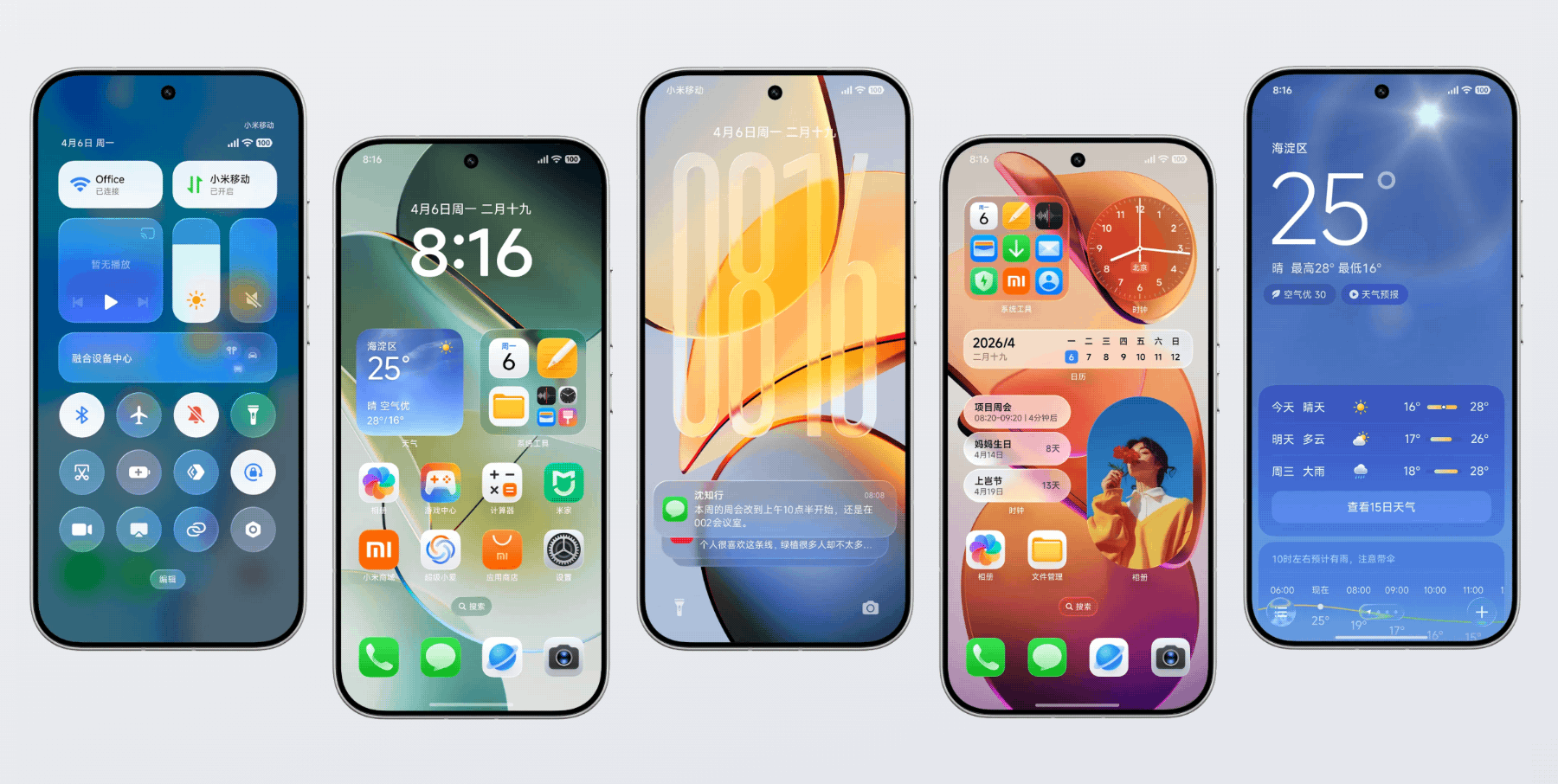
The main areas of improvement include better performance, the new Soft Light Glass design, and deeper AI integration across the operating system.
Performance and Memory Management
HyperOS 4 introduces two new core optimization technologies – Load Calculation and Memory Preloading. The first monitors system load throughout the task execution chain and allocates computing resources more precisely, while the second predicts application requirements and prepares the necessary memory in advance.
Xiaomi has also developed its own Application Runtime Environment designed to improve performance and reduce system overhead.
During continuous device use, memory gradually becomes fragmented. Xiaomi HyperOS 4 introduces a “memory preloading” technology that remembers how much RAM an app needs at startup, compacts fragmented memory in advance, and instantly allocates the required amount.
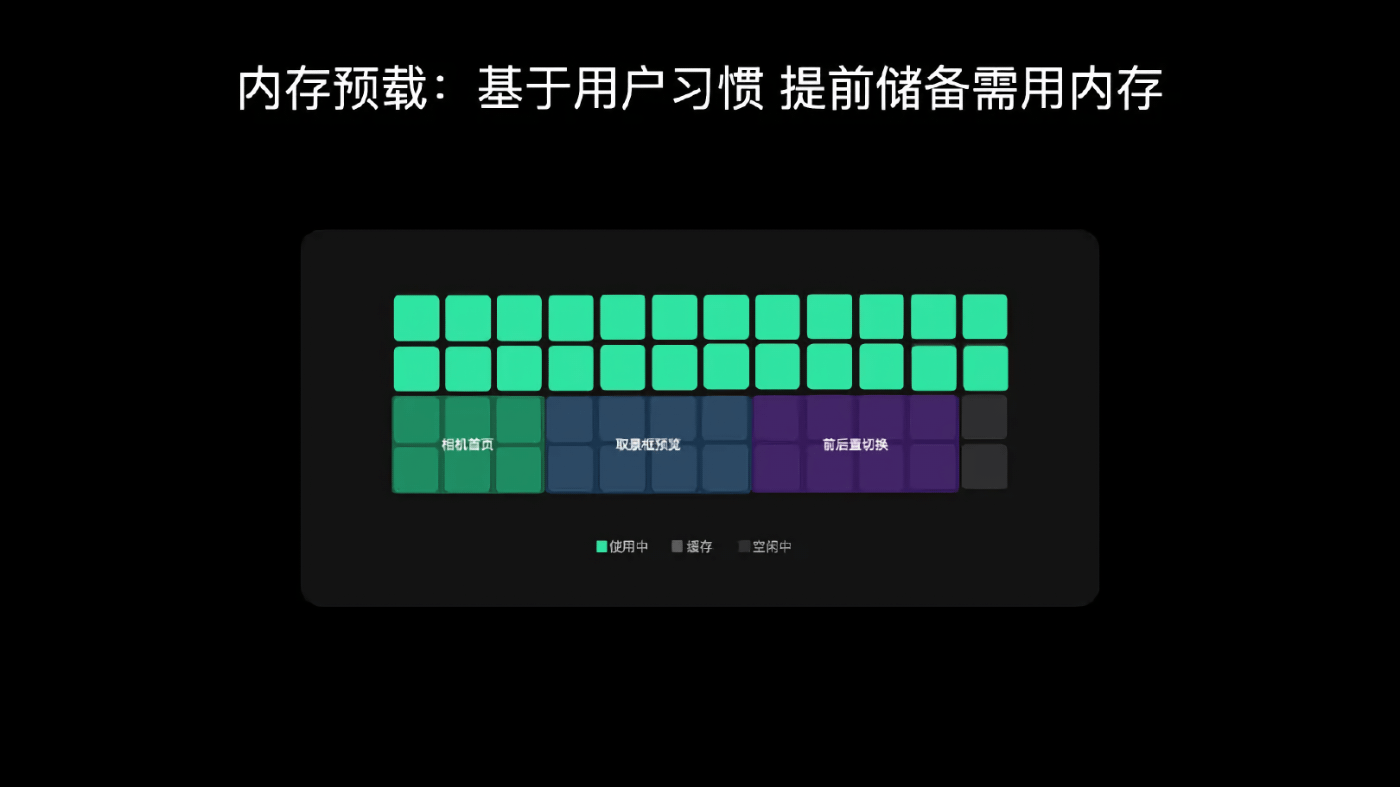
The image shows how HyperOS 4 allocates RAM in advance based on the user’s habits. Using the Camera app as an example, the system reserves memory not only for its main screen but also for likely next actions, such as displaying the viewfinder preview and switching between the rear and front cameras. This preloading should make these operations faster and reduce delays.
According to Xiaomi’s official tests, under heavy background load, the Camera app in HyperOS 4 opens approximately 22% faster: 809 ms compared with 1,044 ms in HyperOS 3. HDR photos are processed about 23% faster after shooting: 240 ms compared with 313 ms.
In addition, after nine hours of active device use, launching 30 apps in succession takes 17.5% less time in HyperOS 4 than in HyperOS 3: 139.7 seconds compared with 169.4 seconds. This means the system is better at maintaining fast app launch speeds after prolonged use.
Short-video scrolling is also smoother. The average dropped-frame rate decreased from 1.27% to 0.11%, resulting in fewer micro-stutters and visible frame skips. After nine hours of use, the difference becomes even greater: 1.61% in HyperOS 3 compared with 0.22% in HyperOS 4.
Xiaomi migrated the system launcher, Weather, and Gallery to a new runtime environment and completely rewrote them in a more efficient programming language. The new architecture reduces resource usage and prevents brief stutters caused by memory cleanup. In an official test, the time required to scan 10,000 photos was reduced by 90%, CPU usage by 28%, and RAM usage by 32%.
System animations under heavy load were also optimized separately. Xiaomi improved the smoothness of opening and closing apps in landscape orientation, moving apps into floating windows, rotating windows between portrait and landscape modes, and switching between apps when the screen orientation changes.
New Soft Light Glass Design
One of the most noticeable changes in HyperOS 4 is the new Soft Light Glass visual style. Translucent interface elements respond to surrounding colors and on-screen content, automatically adjusting their transparency to maintain readability.
Lighting effects also respond to user interactions: elements light up when tapped, while lighting follows an object as it is dragged across the screen.
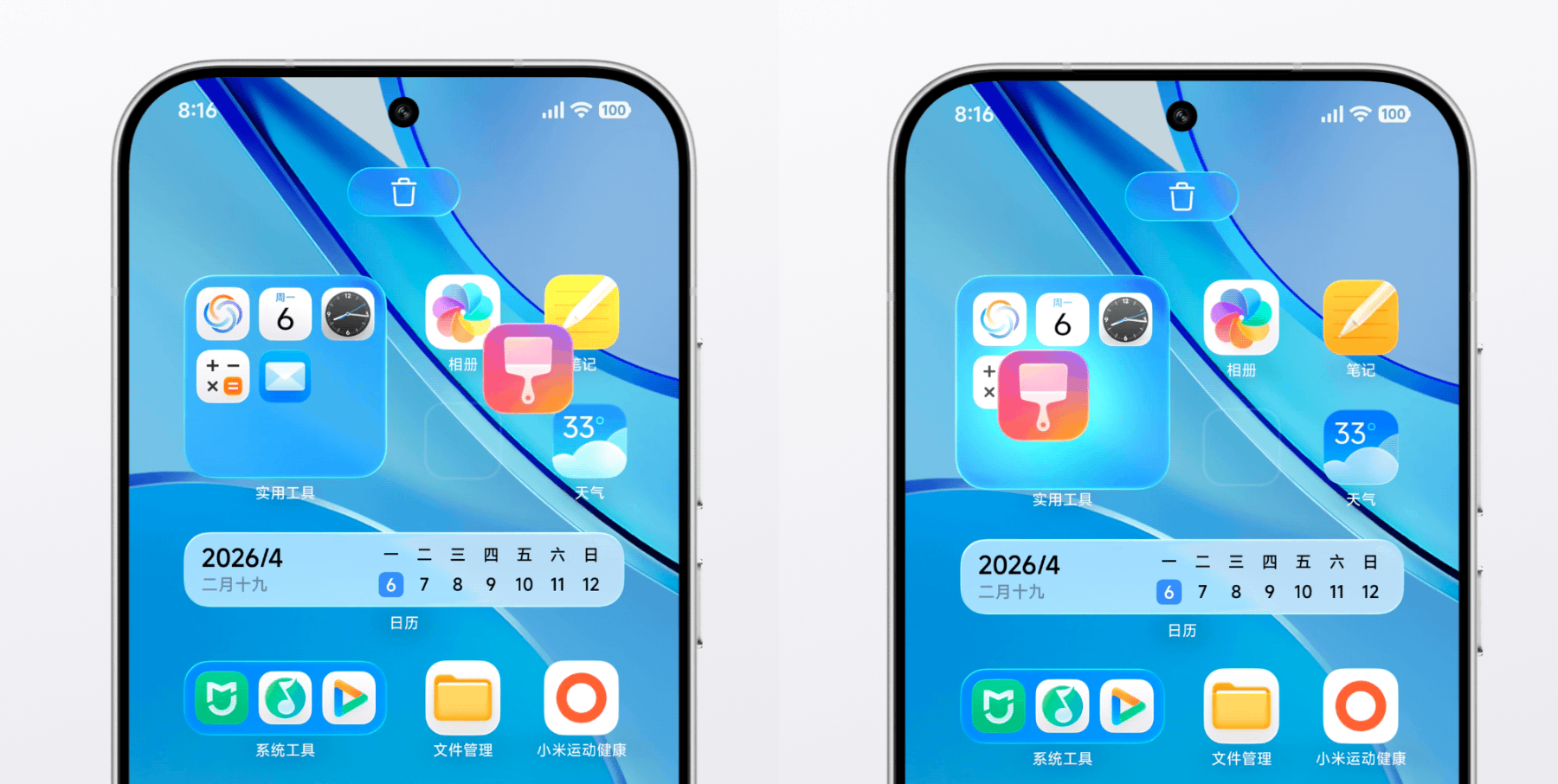
The full set of Soft Light Glass effects is not available on every device. Xiaomi lists smartphones and tablets powered by Snapdragon 8 Elite and newer chips, smartphones with Dimensity 9500 and newer, as well as devices powered by the 3nm XRING O1 and newer processors. Visual effects may differ on other compatible devices.
The official Xiaomi HyperOS account on Weibo reports that while Xiaomi HyperOS 4 remains in beta testing, the Soft Light Glass effect and system performance continue to be optimized. Therefore, the new visual effects are not supported on all models in the beta version.
After the stable version of HyperOS 4 is released, the following phones will receive Soft Light Glass support:
- Xiaomi MIX Fold 4, Xiaomi MIX Fold 3, Xiaomi MIX Flip 2, Xiaomi MIX Flip, Xiaomi 17 and Xiaomi 17T series, Xiaomi 15 series, Xiaomi 14 series, Xiaomi 13 series, Xiaomi Civi 5 Pro, Xiaomi Pad 8 and Pad 8 Pro, Xiaomi Pad 7 Ultra and Pad 7S Pro.
- REDMI K100 Pro series, REDMI K90 series, REDMI K80 series, REDMI K70 series (except REDMI K70E), REDMI Turbo 5 and Turbo 5 Max, REDMI Turbo 4 Pro, REDMI K Pad and K Pad 2.
- There is currently no information about support for POCO devices.
Lock Screen, Folders, and Widgets
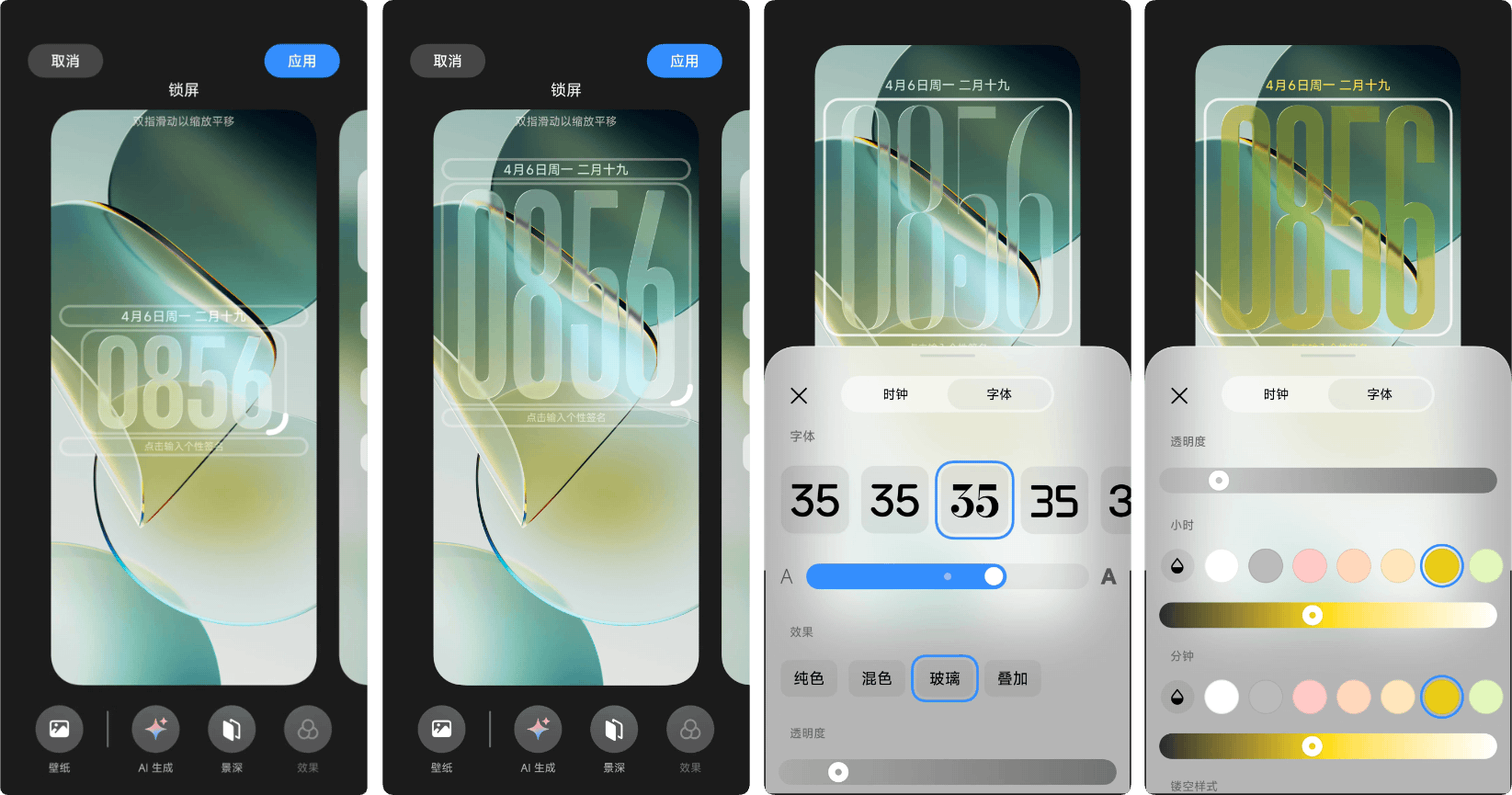
The lock screen now offers additional customization options. Users can change the clock face, but this feature is not supported on all mobile phone models and is currently not available on tablets or entry-level devices. The glass watch effect is only supported on certain flagship models.
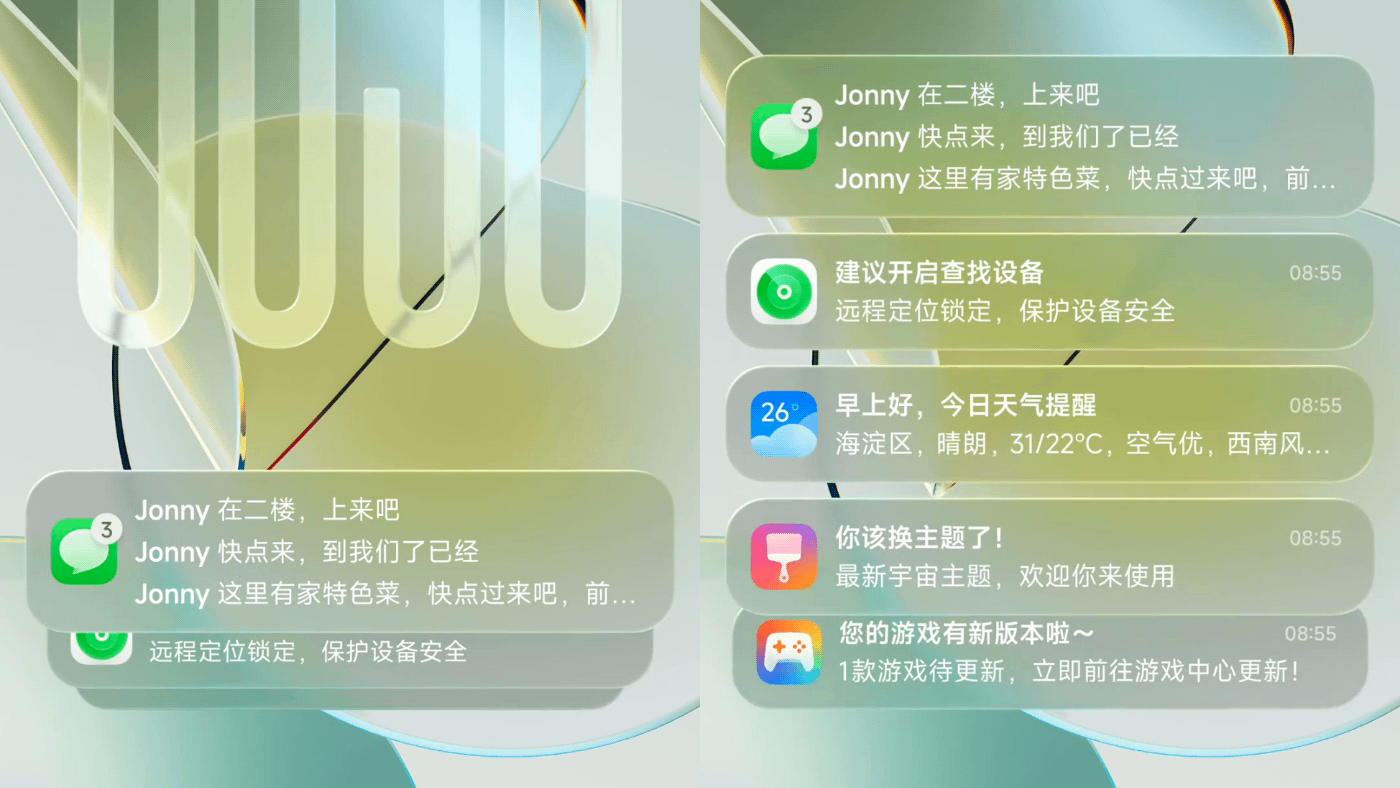
Notifications are grouped into a stack at the bottom of the screen and can be expanded with an upward swipe.
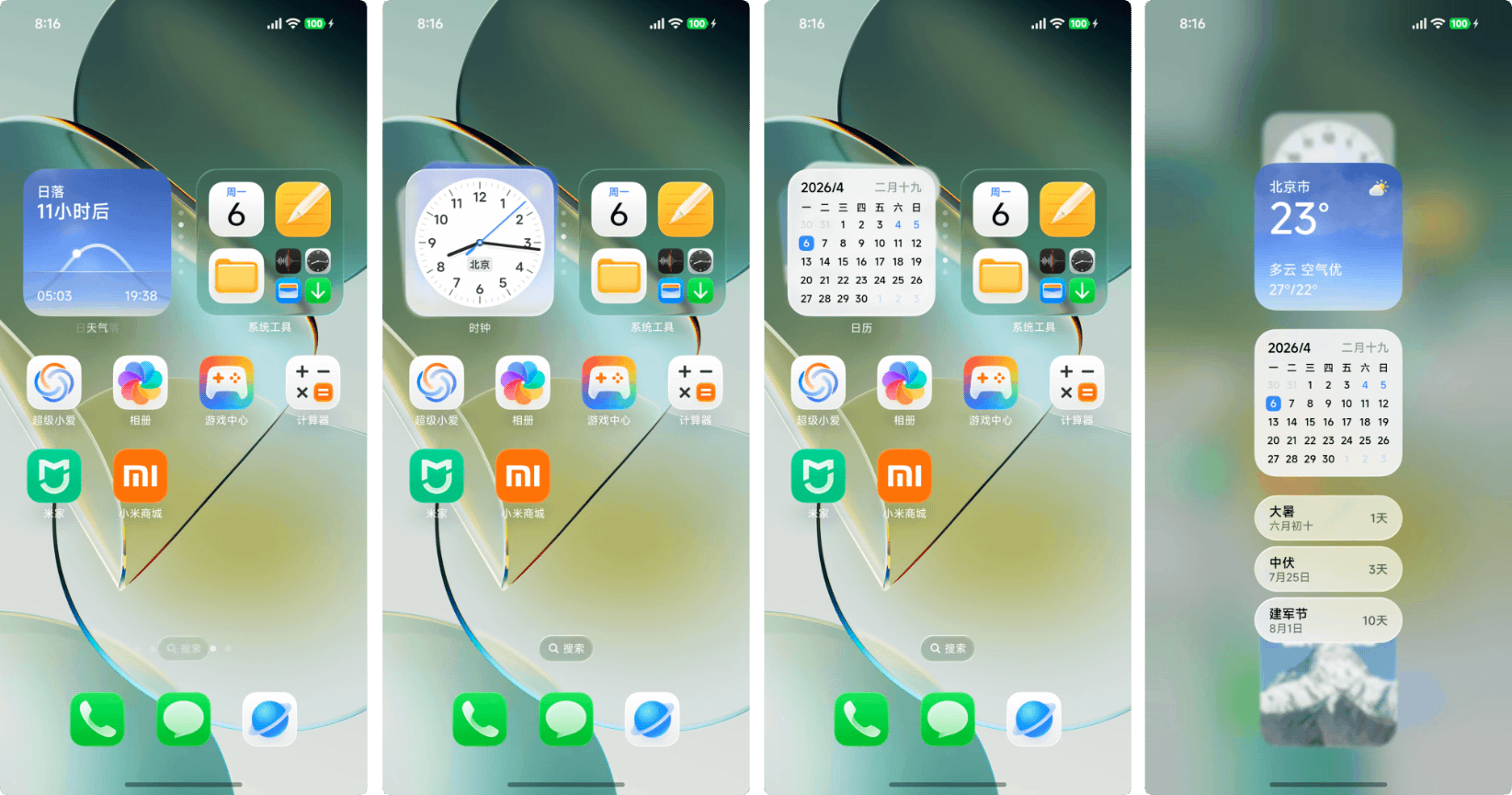
Widget stacks have been added to the Home screen, allowing multiple widgets to be grouped together and switched using gestures. Folder sizes can also be adjusted directly on smartphones, with surrounding elements automatically rearranged.
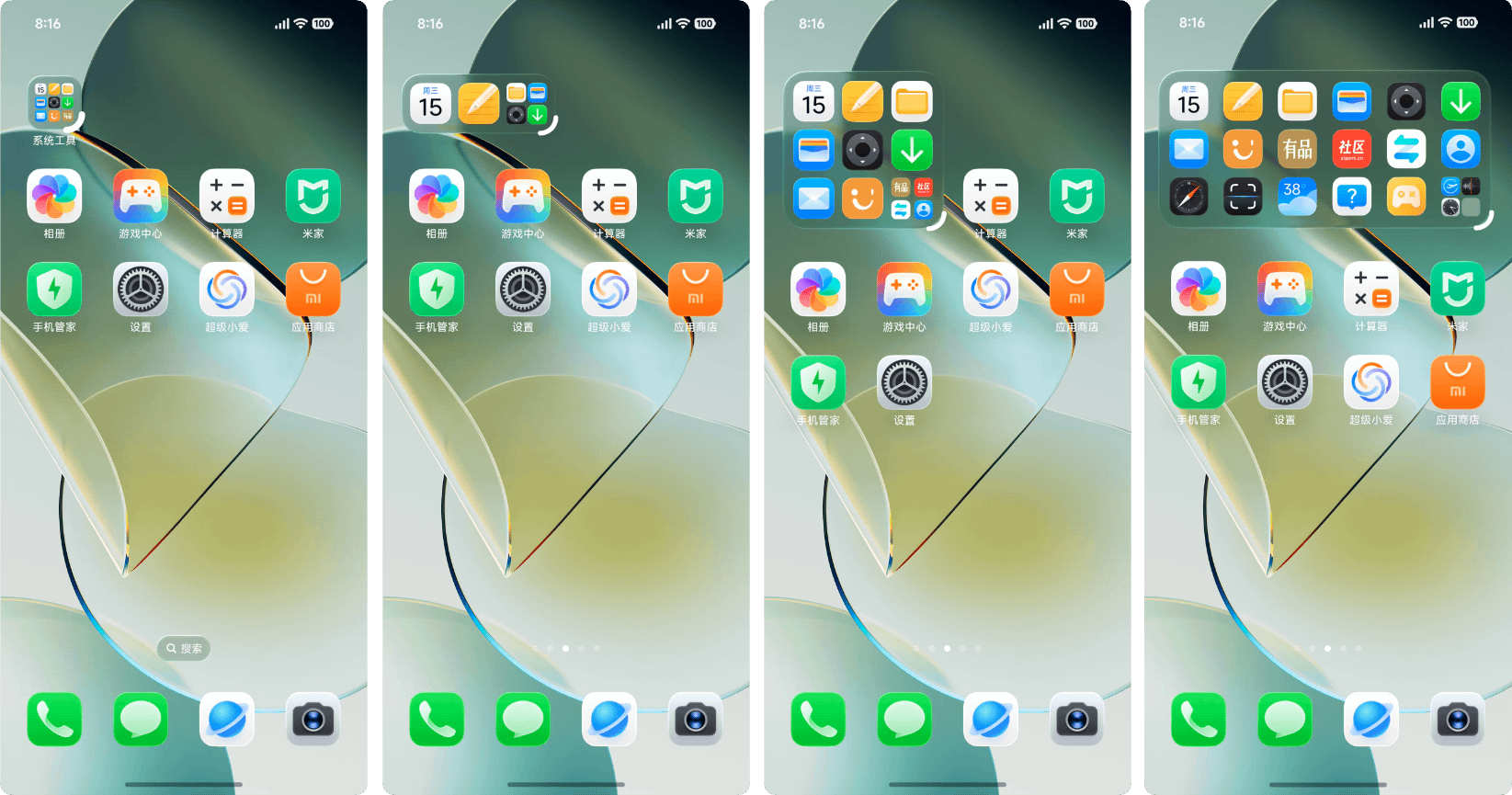
There are four folder size options available on the desktop: compact, landscape, square and wide. The larger the folder, the more apps are displayed inside it.
Xiaomi has redesigned system app interfaces for different screen sizes. Smartphone apps focus on more compact navigation and immersive content viewing, while tablet controls are adapted for larger displays. The Weather app has also received a new interface and dynamic visual effects.
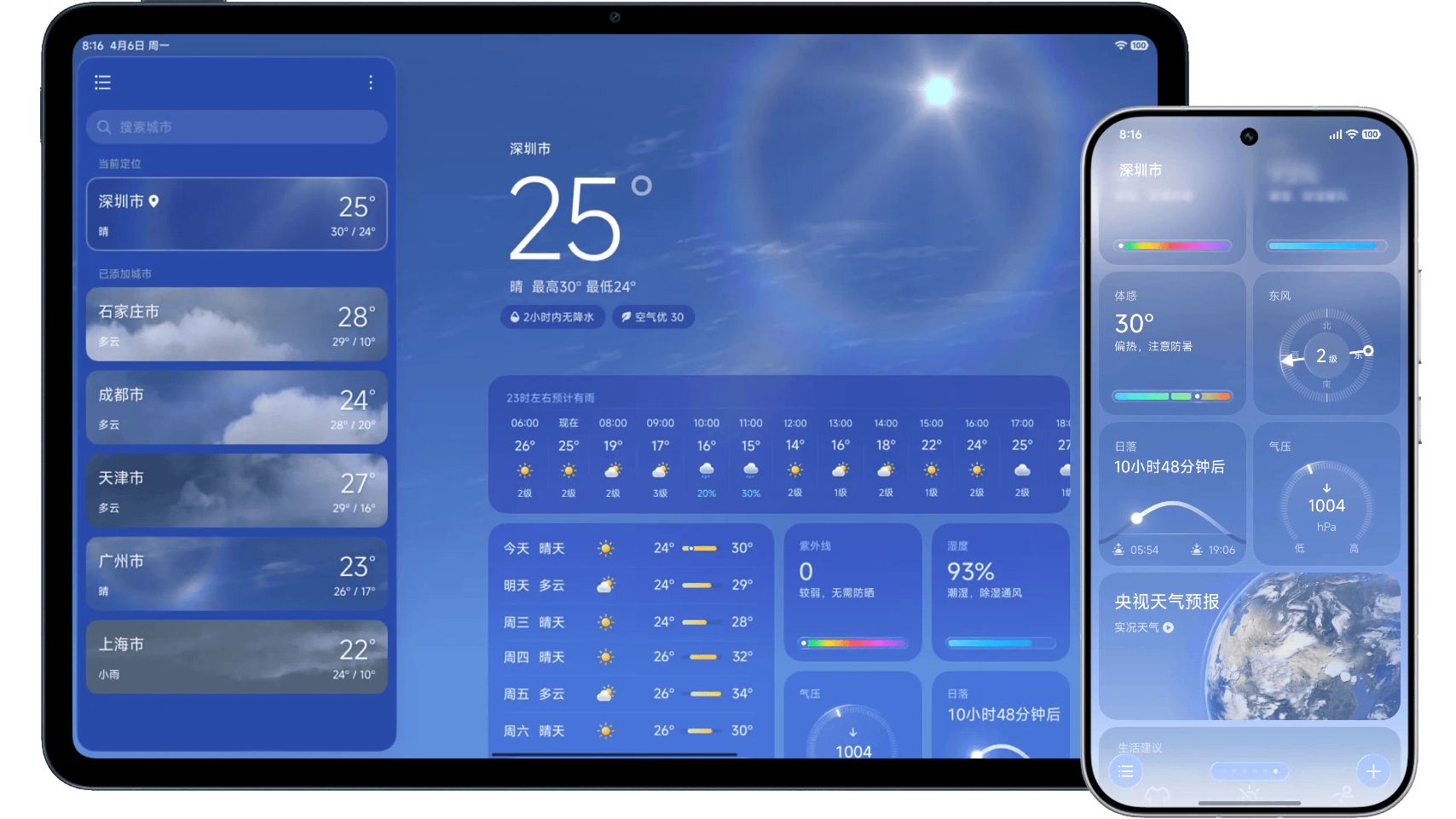
Super XiaoAI 2.0
HyperOS 4 introduces Super XiaoAI 2.0, powered by Xiaomi’s MiMo large language model. In addition to handling regular requests, the assistant features Expert Mode for completing complex tasks using apps and services.
In Expert Mode, Super XiaoAI works as a system-level AI agent: it analyzes the user’s request, breaks complex tasks into steps, selects the necessary tools, and performs the required actions.
Super XiaoAI can search the system Gallery, automatically select relevant photos and create collections, plan trips, add events to Calendar, control smart home devices, and prepare a car before a journey.
Recurring tasks can be scheduled. Users only need to describe the required action once, after which Super XiaoAI can automatically perform it at the specified time and report the result.
The new Super XiaoAI 2.0 features require version 8.1 or later. Expert Mode is available only on selected devices.
The progress of long-running AI tasks is displayed in Xiaomi Super Island. Tasks can continue running in the background while users continue using their phones, and results automatically expand when processing is complete.
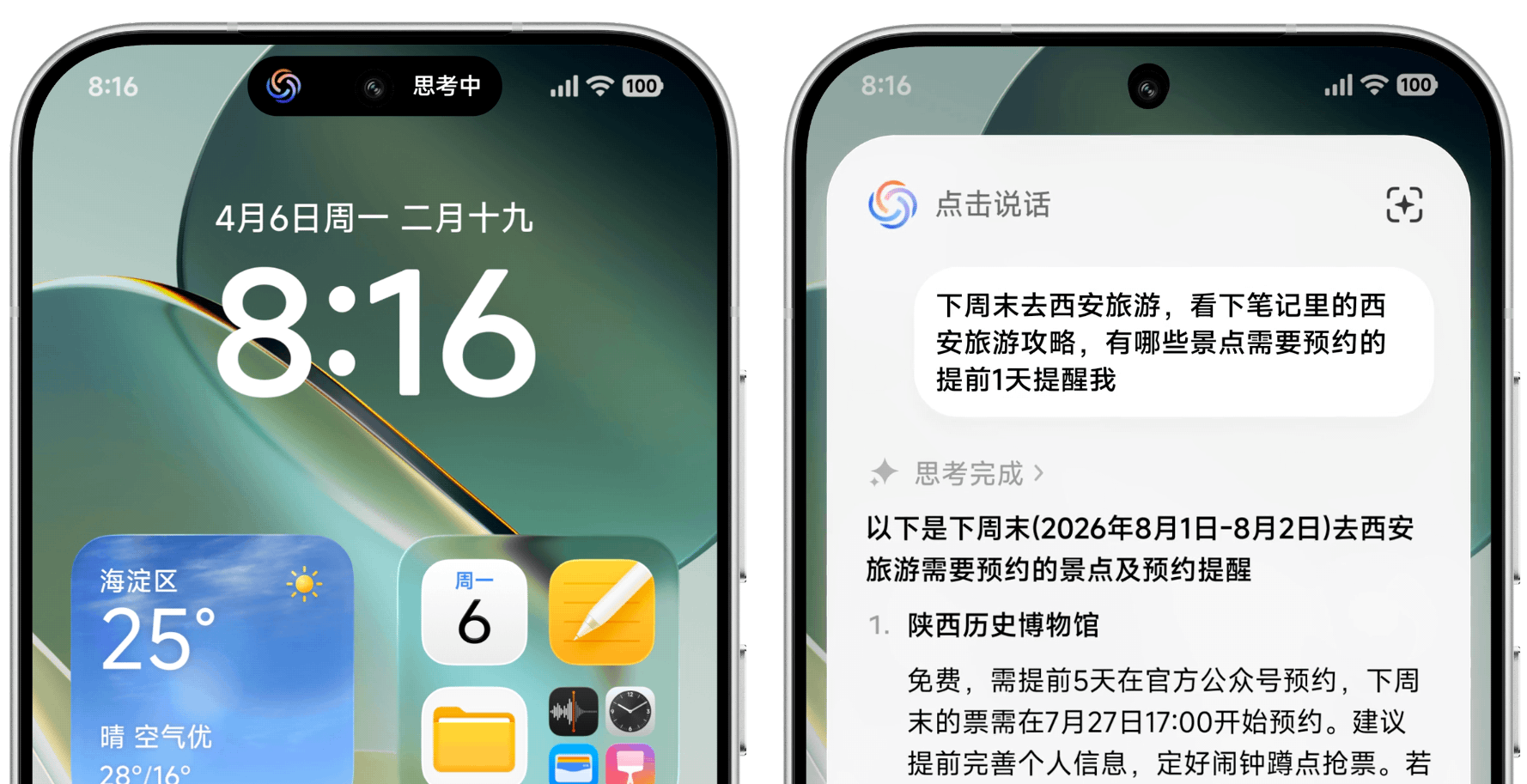
HyperOS 4 significantly expands Super Island support. Xiaomi says more than 130 services are now supported and has added a dedicated Super Island settings page where users can manage which services are allowed to display information on the island.
Inspiration Ball and On-Screen Content Control
The new Inspiration Ball allows users to point Super XiaoAI directly at an object on the screen and use a voice command to explain what they want to do with it.
For example, the assistant can recognize an address displayed on the screen and start navigation, find a similar product and a purchase link, add a date and location from a poster or conversation to Calendar, or edit a photo by removing a person, changing clothing, or adding a new object.
Super XiaoAI can also be activated by long-pressing the system navigation bar at the bottom of the screen. Users hold it, speak a command, and release it without leaving the current app.
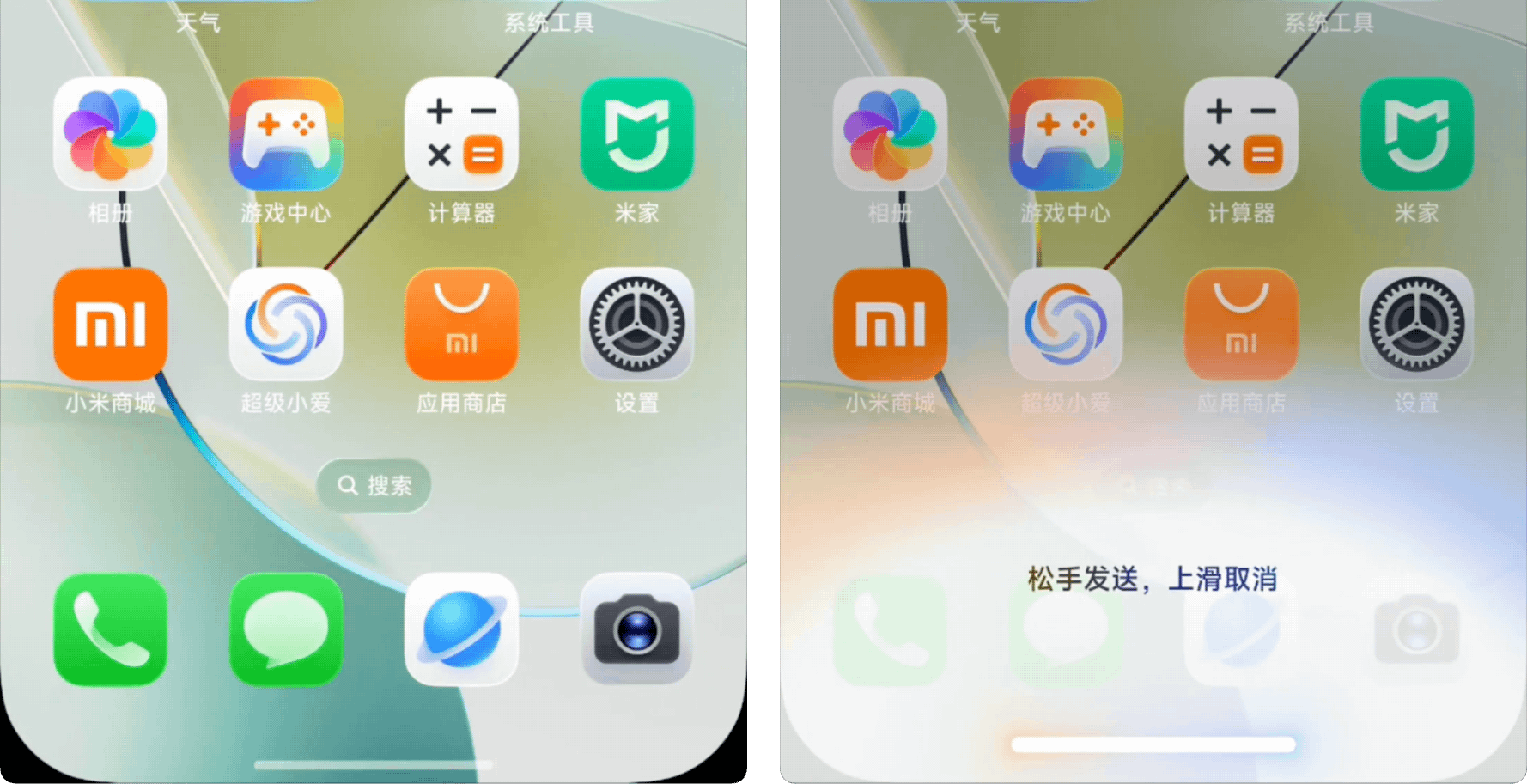
Xiaomi plans to enable Inspiration Ball through an OTA update in September. The feature will be disabled by default and can be enabled in the system navigation settings.
AI Notes and Smart Keyboard
HyperOS 4 includes an updated Xiaomi Notes app. Voice notes can be created with a single tap, after which AI recognizes and automatically organizes the recorded information.
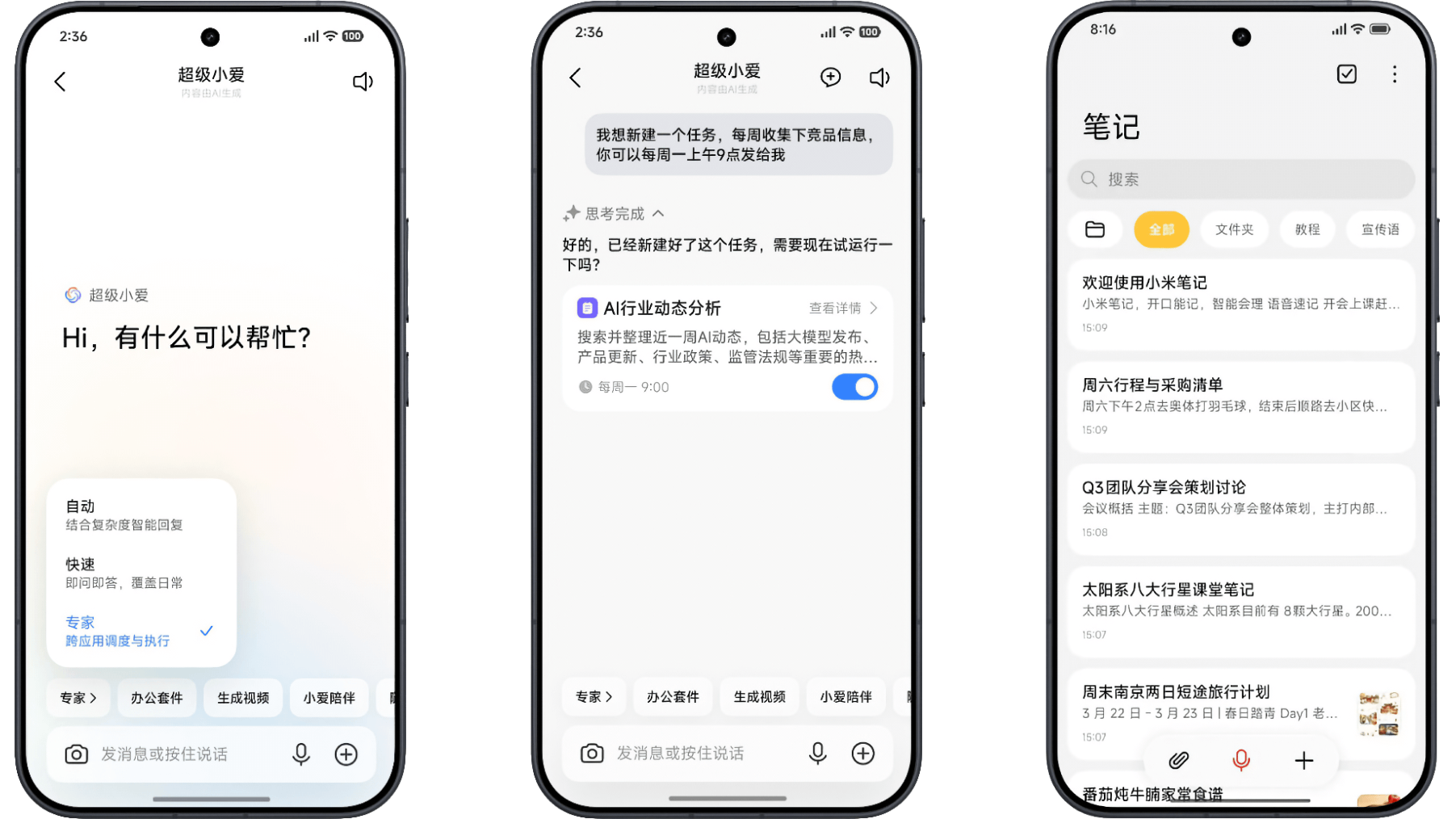
AI Notes supports intelligent organization, AI conversations, and multiple summary templates for automatically creating summaries and structured notes.
The Super XiaoAI keyboard can process voice input, improve phrasing, and convert conversational speech into text better suited to the current context. It also supports Chinese-English translation.
AI Calls and Recorder
Artificial intelligence is integrated into system calls and the Recorder app. Recorder can recognize meeting scenarios, extract key points, automatically create an outline, and help users quickly return to important parts of a recording. Users can also manually mark important moments and automatically skip silent sections during playback.
AI Calls allows users to specify a period during which AI will automatically answer incoming calls. After a call, AI can generate a summary of the key points and suggest responses based on the user’s habits.
AI Calls will be available only on selected HyperOS 4 devices in China. Xiaomi expects to launch the feature around mid-September 2026.
Deep Research, Presentations, Websites, and Video Generation
In HyperOS 4, Super XiaoAI 2.0 includes tools for complex productivity and content-generation tasks through Expert Mode or the Office Suite.
Deep Research can combine information from the user’s personal materials with online knowledge, analyze and organize the data, and generate a structured research report.
Super XiaoAI can also create presentations. Users only need to describe the topic, after which the system can generate the outline, text, and slide design.
AI can generate web pages from a text description, including the page structure, content, and visual style.
In addition to research reports, presentations, and websites, Xiaomi officially lists video generation. Super XiaoAI therefore covers four major content-generation scenarios: Deep Research, presentations, web pages, and videos.
Windows and macOS Integration
Super XiaoAI 2.0 is not limited to Xiaomi smartphones and tablets. Xiaomi Interconnect Service enables integration with Windows and macOS computers.
For example, users can ask Super XiaoAI on their phone to find a specific file stored on their computer. A partial filename is enough to perform the search. The linked computer must be powered on, connected to the network, and not in sleep mode.
Conversations can also continue across devices: a dialogue started on a computer can be continued on a smartphone while preserving its context.
These features require HyperOS 4 and Super XiaoAI 8.1 or later on phones and tablets. Macs require Apple Silicon, macOS 12 or later, and Xiaomi Interconnect Service 4.0.x+. Third-party Windows PCs require 64-bit Windows 10 version 1903 or later and Xiaomi Interconnect Service 2.0.x+.
New Device Center and Dual Phone Support
HyperOS 4 introduces an updated unified Device Center for managing the Xiaomi ecosystem. Frequently used devices can be pinned to the top, while users with multiple Mi Home households can switch between them with a single action.
The Device Center brings together controls for smartphones, tablets, computers, cars, and smart home devices. The redesigned Device Center requires HyperOS 4 and Mi Home version 11.6 or later.
Xiaomi has also introduced a Dual Phone feature. When two Xiaomi phones are connected to the internet and signed in to the same Xiaomi Account, incoming calls and SMS verification codes can be synchronized between them. Users can therefore answer a call on either phone and access verification codes on both devices.
To enable this feature, go to Settings → Device Connection → Cross-device notifications → Receive and select your second Xiaomi phone linked to the same account. Then enable call or SMS synchronization and make sure both Xiaomi phones are connected to the internet.
This feature is supported by smartphones from Xiaomi’s main flagship series, as well as the Xiaomi Flip, MIX, CIVI, REDMI K and REDMI Turbo ranges.
AI Privacy and Security
In HyperOS 4, Xiaomi has expanded privacy protections for personal data accessed by AI. On selected devices, Xiaomi uses its end-cloud privacy computing system to protect user information when local and cloud processing work together. Xiaomi states that user data is used only to complete the requested task.
When the smartphone is locked, Super XiaoAI will not answer requests that could reveal sensitive personal information.
The assistant can control apps and access data only within the permissions granted by the user. Before modifying or deleting data, or sending information to another person or external service, Super XiaoAI requests additional confirmation.
Users can also manage the sources used for Super XiaoAI’s automatic memory and clear stored AI memories at any time. These data-management and sensitive-action confirmation features apply to conversations in Expert Mode.
Most Super XiaoAI 2.0 features and other capabilities currently apply to the Chinese version of HyperOS 4. Feature availability depends on the device model, system version, and installed app versions. Xiaomi has not yet confirmed which of the new AI features will be available in the global version of HyperOS 4.





redmi 14c ko hyper os 4 ka update kabtak milega
All known information is available in the REDMI tracker.
POCO C85X 5G hyperOS 4 update kabtak milega
The POCO update schedule has not yet been published. All known information is published in the POCO tracker.
Poco M7 5G Flame me hyperos 4 ka update milega?
No official information available.
Çok güzel bir şey
iOS 27?
Hyper os 4 is nice 👍
Hyper os 4
It Really Amazing 🤩
Lol note12 turbo not support?
I don’t believe in these deadlines. Xiaomi hasn’t been able to release a security update for the Poco F8 Pro for 7 months, and they want to release HyperOS on time.
Poco F8 Pro december óta nem kapott új biztonsági frissítést!
Nesze neked xiaomi hosszútávú frissítés, már a rajtnál elbuktatok 🙁
Hello
I’m a current user of Redmi a5
Is there any hope of a future update that would improve the UI of the phone as the phone was promised two major android updates.
I await your response
I have poco x8 pro divice please optimize it for hard-core gaming stop the heating issue and fast batry drain issue, and I am satisfied with this device it is so powerful and crezy, thanks Xiaomi
The control center will also be modified, so you can change the location of all the buttons, just like one ui or OxygenOS,
Hello Xiaomi, i have a Redmi 15c phone. Please realese the latest hyperos 4 for this device please increase the os update.
Lol. Redmi 15C was supposed to get hyper 3 february – march. 4th month behind schedule on eu rom. Can’t hold their own announced times. I’m done with their brand. And I owned many redmis since redmi 4x.
I love these xiaomi, redmi note phones
Hello Xiaomi, I have a Redmi pad pro tablet. Please release HyperOS 4 for this device. Please increase the OS updates by more than 2-3. I currently have HyperOS 3.0.301.0, but please give more updates to this device.
It would be nice to see HyperOS 4 on this great tablet.
Redmi note 13 pro hyperos 4 india steble new update
i wish the poco m6 pro 4g will receive a hyper os 4 update
me too